Here Is Something Most People Never Get Told
Every year, millions of people decide to make a change in their life.
A new routine. A healthier habit. Something they want to do less of, or stop altogether.And most of them — despite genuinely wanting the change — find themselves back where they started within a few weeks.
Sound familiar? It should. It happens to almost everyone.
But here is the part that almost nobody talks about:
The reason those attempts didn't stick had absolutely nothing to do with the person's character, motivation, or how much they wanted it.
It had to do with a specific gap in how the brain's habit system actually works.
And until someone fills that gap — using the right sequence of steps in the right order — the old pattern keeps coming back.
Scientists have now mapped exactly what that gap is. More importantly: they've identified precisely how to close it.
(Keep reading. This is where it gets interesting.)
The Missing Piece Nobody Knew About
Back in the 1990s, researchers settled on a tidy little model for how habits work.
Cue. Routine. Reward. Three steps. Clean. Simple.
The only problem? It explains how habits run. It doesn't explain how to permanently replace one.
And that distinction turns out to be enormous.
Because here's what was discovered more recently — and this is the piece that changes everything:
The brain will not allow a new behaviour to become automatic unless it first decides that the new behaviour belongs to the kind of person it thinks the individual already is.
Read that again slowly. It matters.
It means that the brain isn't really in the business of learning new behaviours in a vacuum. It's in the business of running patterns that match its built-in picture of who a person is.
Try to bolt a new habit onto an old identity, and the brain quietly rejects it — like a transplant that doesn't take. Update the identity picture first? The new behaviour locks in almost automatically.
Oxford researchers have given this mechanism a name. They call it Cognitive Belief Architecture. And they've spent years mapping exactly how to use it.
But the really good news is coming up in a moment. Because there's a specific set of steps — anyone can follow them — that activates this mechanism on purpose.

A Scientist, A Stopwatch, And A Very Surprising Result
In 2010, a researcher named Phillippa Lally at University College London ran one of the most quoted studies in modern habit science.
She wanted to find out how long it actually takes to form a new habit. The popular answer at the time was 21 days. (It isn't. It never was. That number came from a plastic surgeon's observation about patients adjusting to new noses. Seriously.)
Lally's research found the real answer was anywhere from 18 to 254 days — with an average of around 66.
But the finding that didn't make the headlines was arguably more important:
The people who used a specific mental technique — called Implementation Intention — formed their new habits significantly faster than everyone else.
Implementation Intention is a fancy phrase for a simple idea: mentally rehearsing the new behaviour in context before doing it.
When people did this — and combined it with the identity-level belief shift that Oxford's work describes — the habit locked in dramatically faster.Meanwhile, researchers studying the basal ganglia (the part of the brain that actually runs habits) found something that lines up perfectly with all of this:
Habit change built on identity alignment encodes into long-term memory up to three times faster than change built on willpower alone.
Three times. Not a small difference.
And this is exactly what Tom Black's method is built around.
So What Does Any Of This Have To Do With Drinking?
Great question. Here's the honest answer.
Of all the lifestyle habits that people commonly want to change, habits around alcohol are among the most neurologically embedded.
Why? Because alcohol consumption — particularly regular consumption — tends to weave itself into the social, emotional, and identity fabric of everyday life in a way that few other habits do.
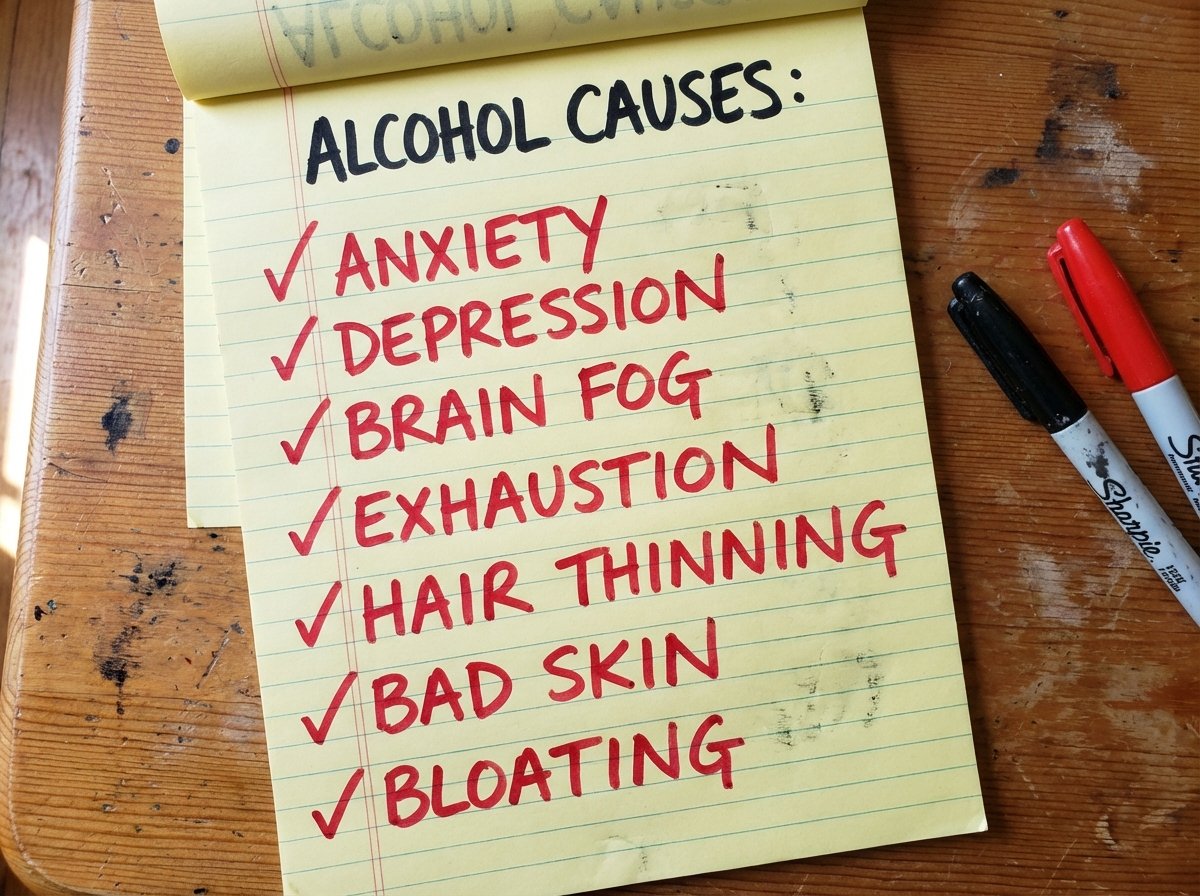
Evening rituals. Social situations. The end of a long day. Celebrations. Stress. Boredom.
These aren't just cues in a habit loop. They're layers of identity and meaning that the brain has spent years encoding.
Which is precisely why approaches that focus only on stopping — through willpower, group accountability, or structured abstinence — so often produce short-term results that don't last.
They're pulling at the branches. The root system is still intact.
Tom Black's method goes for the root. It uses the same neuroscience-backed mechanisms described above — identity shift, implementation intention, procedural memory encoding — and applies them specifically to the layered habit patterns that form around alcohol.
The result is a guide that doesn't ask readers to grit their teeth and endure. It asks them to understand — and then work with their own brain's architecture instead of against it.
The Book — And The Man Who Wrote It
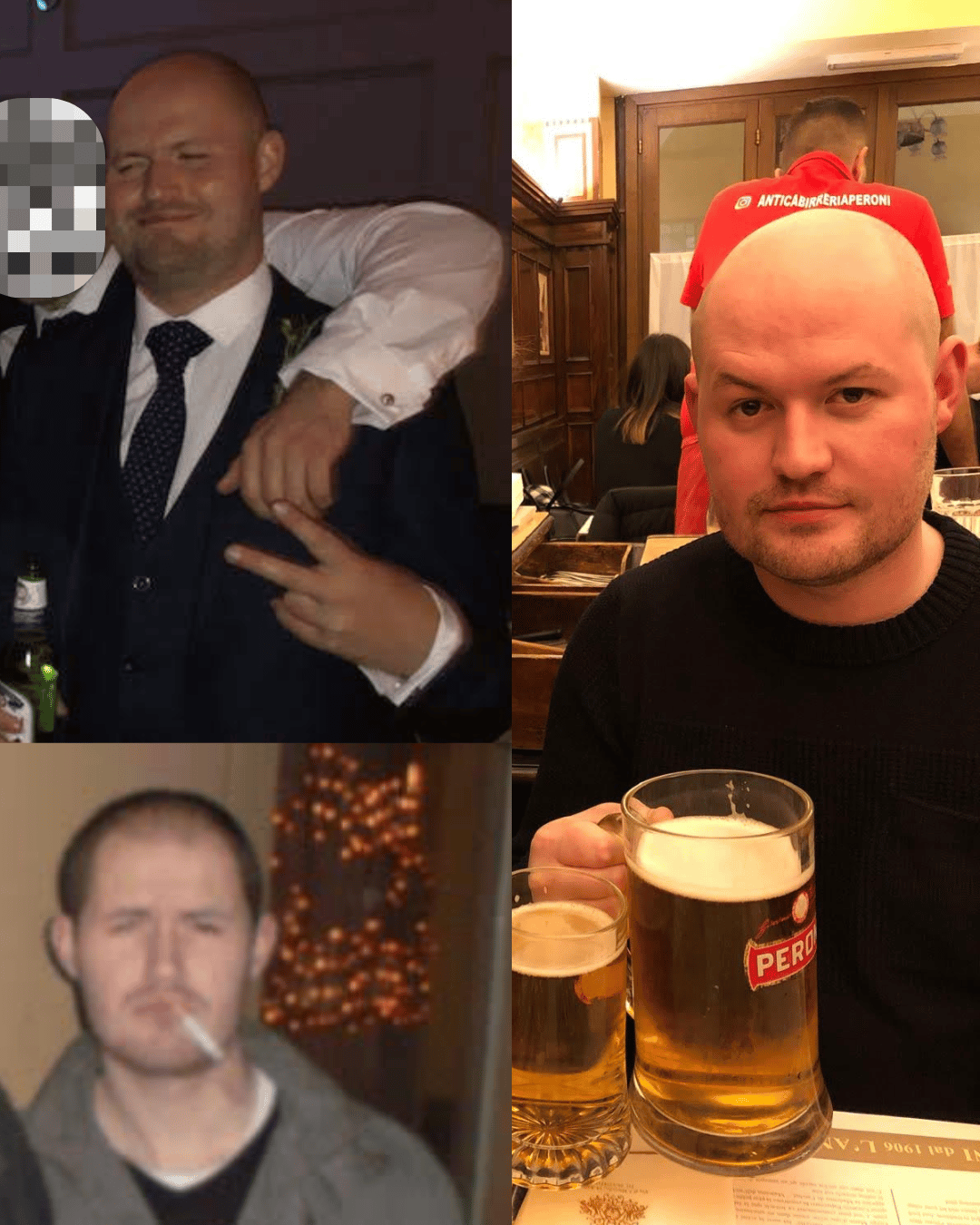
Tom Black is not a professor. He's not a therapist. But he does know something about habits around alcohol that no textbook ever taught him. Because for years, he lived it.
Before the pandemic, Tom's drinking reached a point that's difficult to describe without understatement. Jobs lost. Relationships that never got off the ground. Days that blurred into each other. A version of life that looked, from the outside, like it had stopped working and felt, from the inside, considerably worse than that.
He tried the conventional routes. The ones everyone suggests. Some of them made things harder, not easier. A few left him feeling worse about himself than before he'd started. Nothing stuck.
Then Tom found the research. Not a programme. Not a sponsor. Not a mantra. Just science; the kind that actually explains what's happening inside the brain when a habit takes hold, and more importantly, what sequence of steps causes the brain to let it go.
He applied the method. Within a few weeks, the habit was gone.
Not white-knuckled into submission. Not bargained with or managed. Just... gone. Over time his weight dropped, his skin cleared, his mood improved. He became a new person. Better. That was over six years ago.
In the time since, Tom landed a job he's genuinely proud of, met the woman he'd spend his life with, got married, and at the time of writing — has a son who is almost one year old.

He's said publicly that he owes all of it to this method. That without it, he's not convinced he'd be here to talk about any of it.
He wrote No Booze: Escape the Alcohol Matrix because the research that changed his life deserved to be in plain English — not locked away in academic journals, not filtered through expensive programmes, not gatekept by anyone.
Just a clear, practical, science-grounded guide that works the way the brain actually works.
- The exact identity shift process that Oxford's research identifies as the fastest-known route to making new habits permanent — explained in plain English with a step-by-step walkthrough
- Why most attempts to change a drinking habit actually make it stronger (counterintuitive but true) — and the one change that stops this immediately
- The Habit Displacement Stack: Tom's practical, research-backed sequence of daily steps that gets a new pattern encoding faster than any willpower-based approach
- The real reason evenings, weekends, or social situations feel 'off' without a drink — and a simple, proven method for reprogramming that feeling
- Why '66 days' matters more than 'one day at a time' — and how the method is structured around the actual timeline the neuroscience describes
- The social and emotional 'meaning layers' that make alcohol habits sticky — and how to dissolve them without feeling deprived
- A complete, step-by-step implementation plan that anyone can follow, starting the same day they read it
No Meetings. No Rehab. No Waiting Lists.
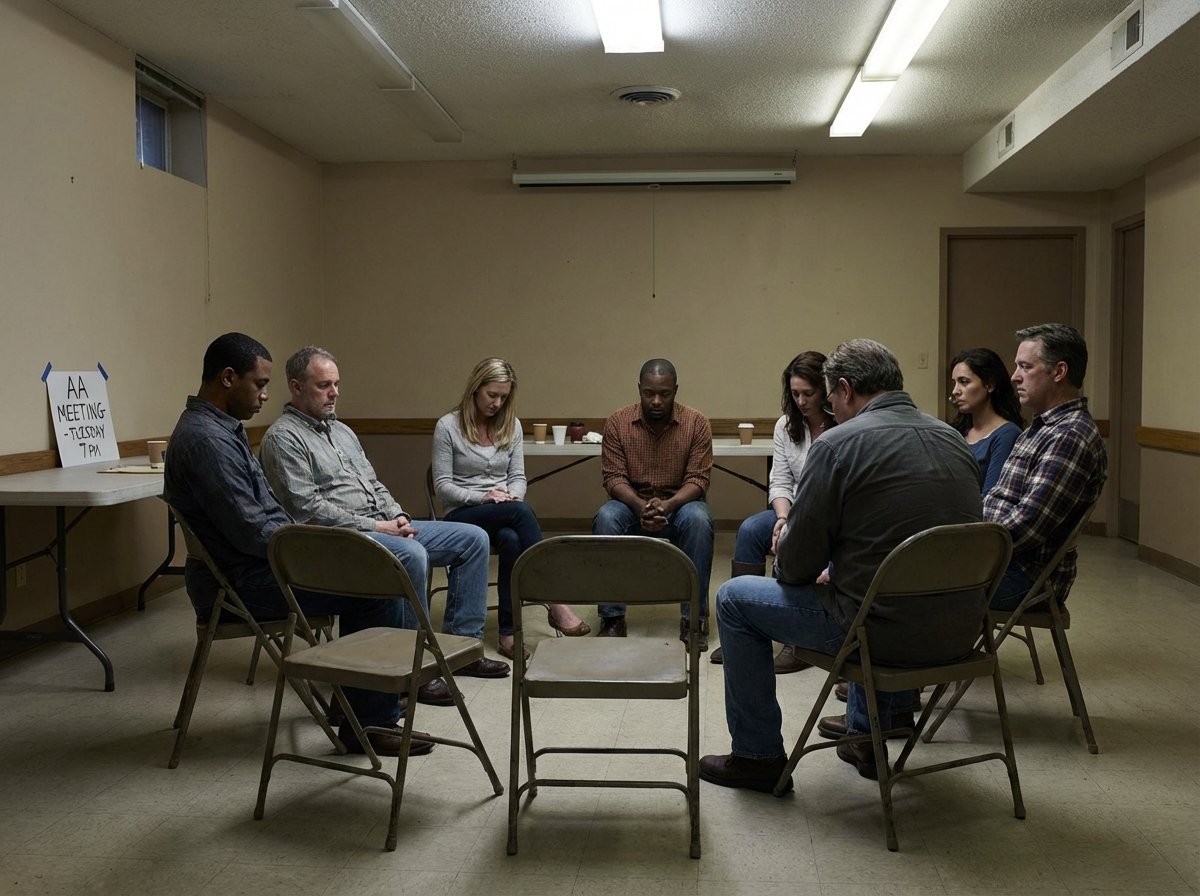
Structured group programmes and residential treatments have supported a lot of people over many decades — and for some, they remain the right path.
But for many people, those options come with barriers. Scheduling. Cost. Privacy. The need to attach a label. The requirement to show up and be seen.
And increasingly, the research is pointing toward the fact that the underlying model used by many of these approaches — built on willpower, sponsorship, and spiritual accountability — was designed before neuroimaging existed.
Before scientists could actually watch what the brain does during habit change.
Five-year retention studies on group-based programmes report success rates in the range of 5–15%. Residential programmes see relapse rates of 40–60% within the first year.
Those numbers aren't a reflection of people's commitment. They're a reflection of a model that predates the science.
No Booze: Escape the Alcohol Matrix was built after the science. That's the difference.
What Readers Are Saying:
"Genuinely the clearest explanation of why change has felt difficult that I have ever read. The method is practical, the science makes sense, and the results have been real."
— M.T., 44, Leeds
"Read it in two sittings. Applied the method the next morning. Seven months on, and the habit that felt impossible to break simply isn't there anymore."
— D.H., 51, Edinburgh
"No judgement, no labels, no drama. Just a smart, well-researched method explained by someone who clearly knows the subject inside out."
— S.R., 38, Manchester
One Last Thing — And This Is Worth Doing
Tom Black and his team have put together a short quiz — it takes about 60 seconds — designed to help readers understand how habits around alcohol may be showing up in everyday life.
It's not a medical assessment. It's not a diagnosis. It's a simple, honest look at a few patterns — built around the same questions that behavioural researchers use to map habit strength.
Most people find the results genuinely eye-opening. Not because the quiz tells them something alarming but because seeing a habit mapped clearly, in black and white, is often the moment the process of change actually begins.
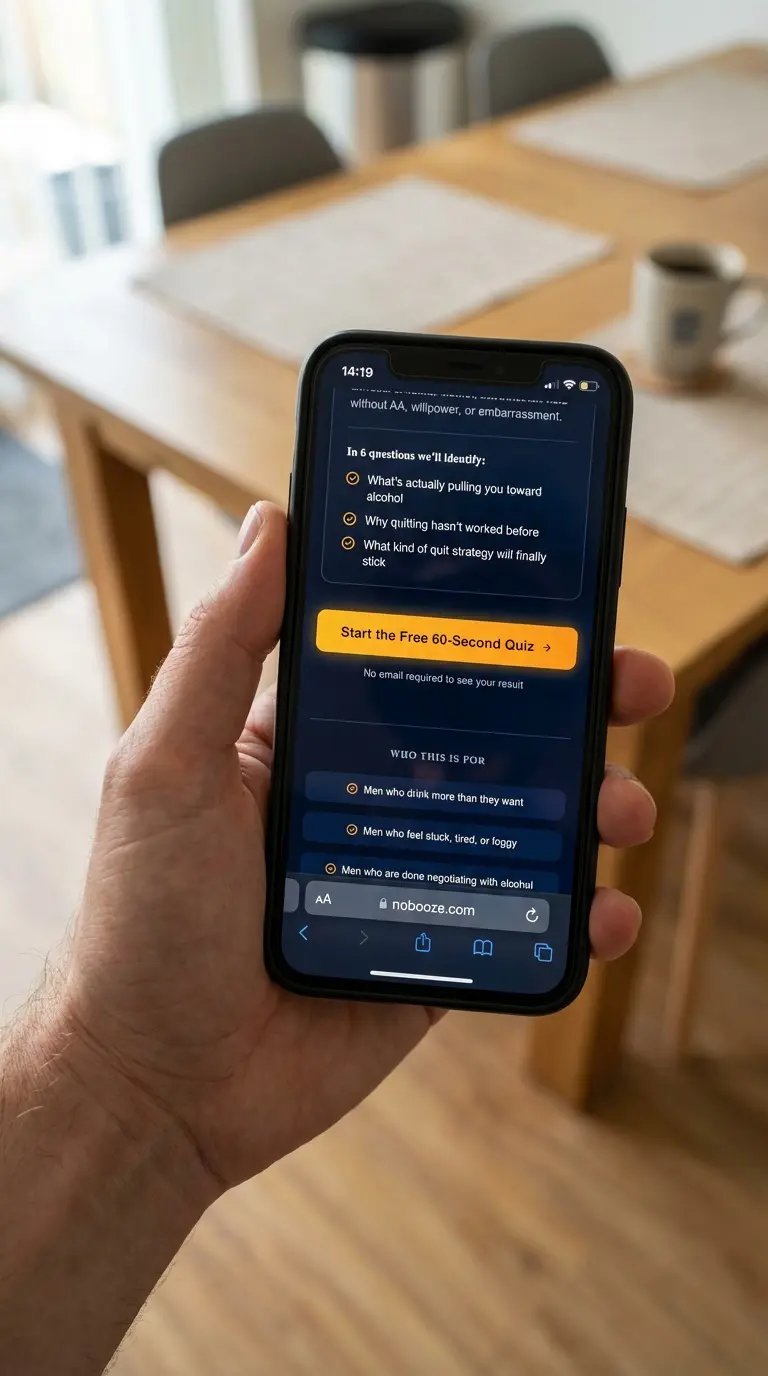 >> Take The Quiz <<
The quiz is free. It's anonymous. And it takes less time than making a cup of tea.
The one thing worth knowing before taking it:
The researchers whose work underpins this method consistently found that the single most important step in the entire habit change process is the decision to honestly assess the current pattern.
Not white-knuckling. Not cold turkey. Not joining anything.
Just an honest look. That's where it starts.
TAKE THE FREE 60-SECOND QUIZ NOWSee how habits around alcohol may be showing up — and what can be done about it.
Free. Anonymous. Takes 60 seconds.



 124 Likes
 18 Replies
