What Freedom Actually Feels Like — And Why It Gets Hard To Find
There is a particular feeling that most people can recognise, even if it's hard to name.
The feeling of doing something not because a choice was made — but because the pattern just... ran. Like a script.Evening arrives. The habit activates. There's a brief moment of awareness — maybe even a flicker of 'I wasn't going to do this tonight' — and then the pattern carries on regardless.That gap between intention and action. Between the life someone wants and the one that keeps showing up automatically.
Researchers call this 'habit capture' — the state in which a behaviour has become so deeply encoded that it bypasses conscious decision-making almost entirely.
It's not weakness. It's not lack of character. It's a specific neurological condition — and it has a specific neurological solution.
The exciting part is coming. Because the research doesn't just explain the problem. It maps the exact path out.
The Science Behind It — Explained Simply
Back in the 1990s, researchers settled on a tidy little model for how habits work.
Cue. Routine. Reward. Three steps. Clean. Simple.
The only problem? It explains how habits run. It doesn't explain how to permanently replace one.
Oxford's Department of Experimental Psychology spent years digging into that gap. What they found is now quietly reshaping how the science community thinks about lasting behaviour change.
The key discovery: before the brain will allow a new behaviour to become automatic, it has to first decide that the new behaviour belongs to the kind of person it believes the individual already is.
In other words — the brain isn't updating a habit. It's updating an identity.
Try to bolt a new behaviour onto an old sense of self, and the brain quietly rejects it. Update the identity picture first — and the new behaviour locks in almost on its own.
Researcher Phillippa Lally at UCL confirmed this in a landmark study — finding that habits take 18 to 254 days to form, but that people who used a specific mental technique called Implementation Intention formed new habits significantly faster than everyone else.
Combine that technique with Oxford's identity-shift mechanism, and the result is a method that works with the brain's own architecture — instead of fighting it.What Personal Freedom Looks Like When A Deep Habit Shifts
People who use neuroscience-backed methods to change deep lifestyle habits consistently describe a similar set of experiences in the weeks and months that follow:- Freedom from craving: as the identity shift takes hold and new patterns encode, the pull of the old habit diminishes — not through suppression, but through genuine replacement at the neurological level
- Alignment with values: one of the most commonly reported experiences is a sense of living in closer alignment with the kind of person one actually wants to be — a coherence between intention and action that many describe as feeling 'like themselves again'
- New coping mechanisms: the emotional functions that alcohol served — stress relief, social ease, unwinding — are replaced by healthier, more effective patterns that the method builds deliberately
- A renewed sense of purpose: freed from the cognitive and emotional overhead of managing a deep habit, people consistently describe gaining access to energy, creativity, and ambition that had previously felt out of reach
- A life that feels chosen: perhaps the most significant shift — moving from a life that runs on automatic to one that reflects actual decisions, values, and goals
This is what the research points toward — not just the absence of a habit, but the presence of something better.
A life that genuinely belongs to the person living it.

Tom Black — The Life He Almost Didn't Get To Live
Tom Black has said publicly that he isn't sure he would be here today without this method.
That's not a figure of speech. At his lowest point before the pandemic, after years of heavy drinking, lost jobs, and a personal life that had never really got off the ground, he had run out of conventional options.
Every approach he'd tried had failed to address the root. Most left him feeling worse about himself than before.
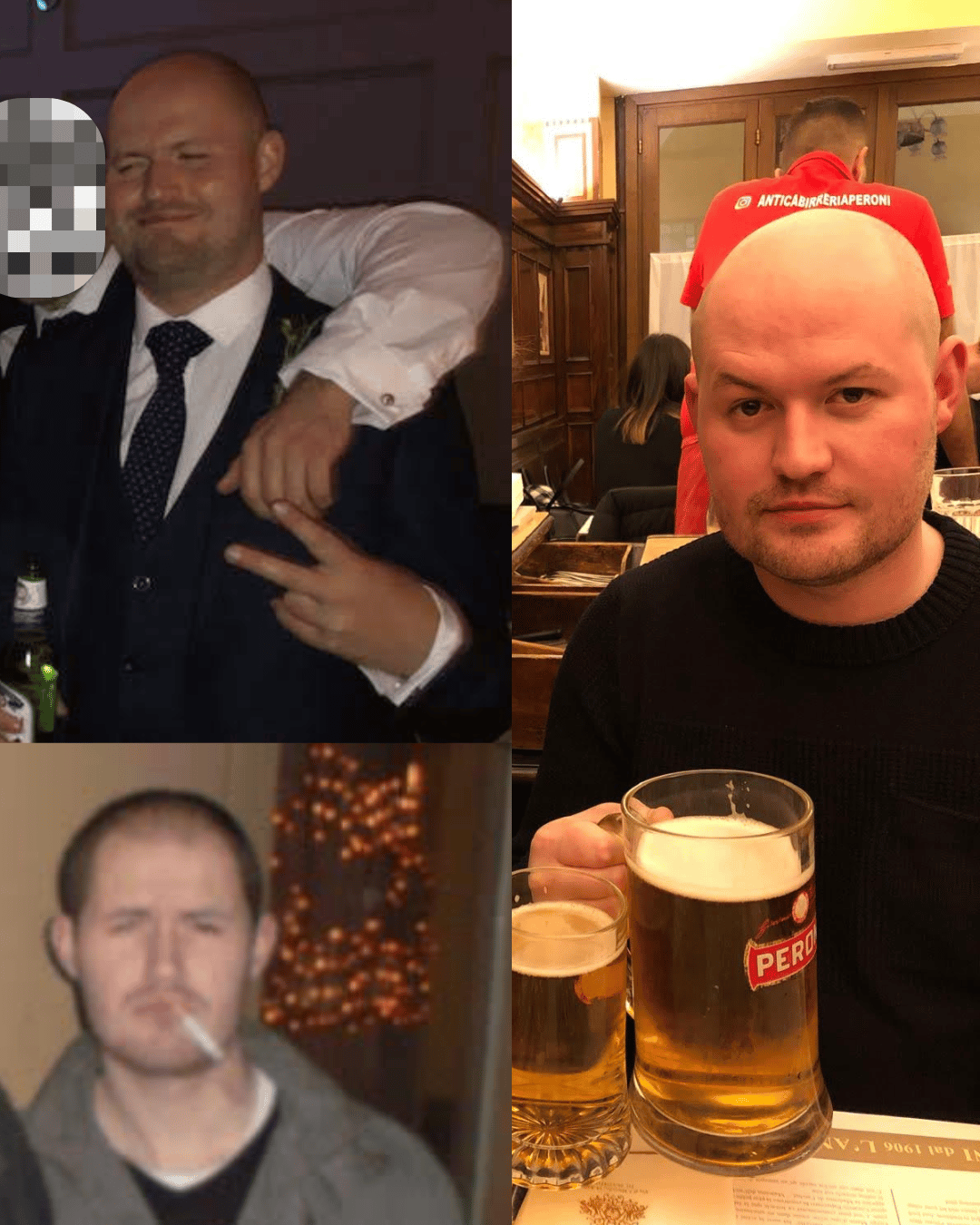
When he found the neuroscience — the identity shift mechanism, the habit displacement framework, the implementation intention research — something changed that had never changed before.
The habit stopped. Not through gritting teeth. Not through willpower or meetings or labelling himself anything. Through understanding the mechanism — and using it.
That was over six years ago.
Since then: a career he's proud of. A marriage. A son, almost one year old at the time of writing. A life that, in his own words, he couldn't have imagined from where he was standing.
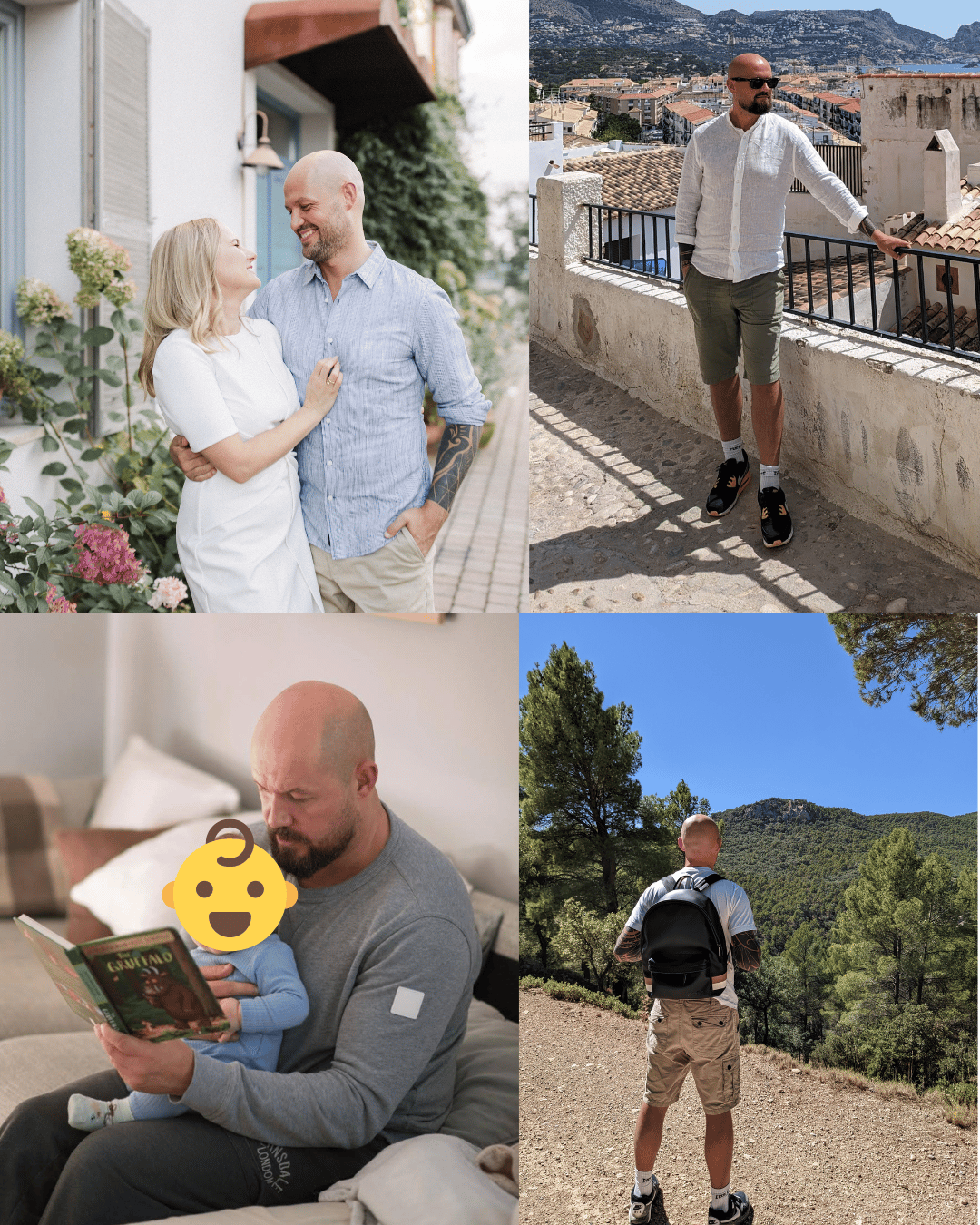
He wrote No Booze: Escape the Alcohol Matrix for every person who can feel the gap between the life they're living and the one they believe they're capable of — and hasn't found a way across it yet.
Inside The Method — What Readers Discover
- Why habits around alcohol feel less like choices and more like obligations — the neuroscience of habit capture explained in plain English
- The exact identity shift process that Oxford researchers identify as the fastest known pathway out of automatic habitual behaviour
- How to build new, healthier coping mechanisms that actually work — using the same neural systems the old habit used
- The specific daily sequence of steps that causes a new pattern to encode faster than willpower-based approaches by a factor of three
- What personal freedom feels like from the neurological side — and how to reach it using a method that works with the brain, not against it
- A complete, step-by-step plan — private, immediate, and built for the real world
No Meetings. No Rehab. No Waiting Lists.
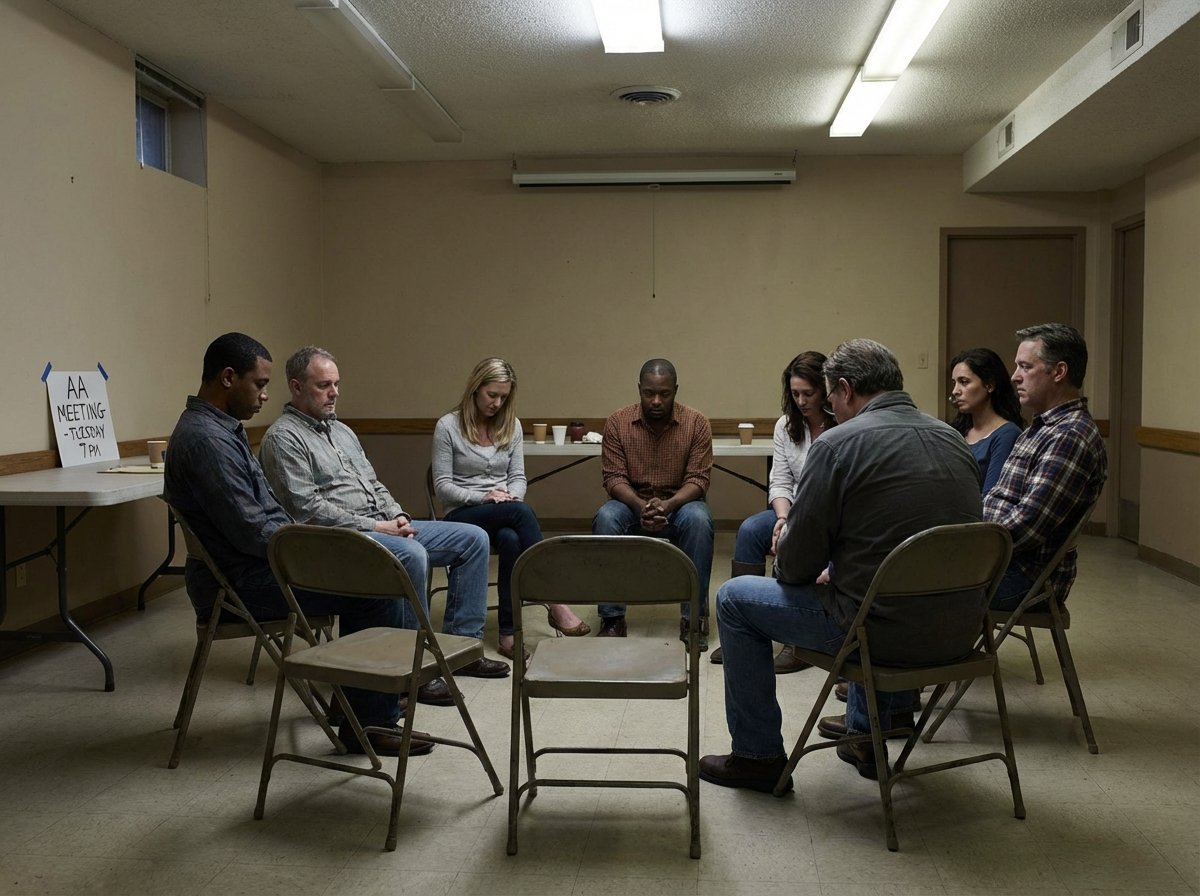
Structured group programmes and residential treatments have supported a lot of people over many decades — and for some, they remain the right path.
But for many people, those options come with real barriers. Scheduling. Cost. Privacy. The need to attach a label.Five-year retention studies on group-based programmes report success rates of around 5–15%. Residential programmes see relapse rates of 40–60% within the first year.
Those numbers aren't a reflection of people's commitment. They're a reflection of a model that predates the science.
No Booze: Escape the Alcohol Matrix was built after the science. That's the difference.
What Readers Are Saying:
"For the first time in years I feel like my evenings belong to me. Like I'm choosing what to do with them instead of the habit choosing for me. That sense of freedom is genuinely difficult to put into words."
— F.A., 40, Edinburgh
"I started reading this expecting a quit-drinking book. What I got was a completely different understanding of who I am and what I'm capable of. Six months later I barely recognise the old pattern."
— L.B., 33, Bristol
One Last Thing — And This Is Worth Doing
Tom Black and his team have put together a short quiz — it takes about 90 seconds — designed to help readers understand how habits around alcohol may be showing up in everyday life.
It's not a lifestyle assessment. It's a simple, honest look at how deeply encoded habits around alcohol may be running in the background — and what the research suggests becomes possible when they change.
The quiz is free. It's anonymous. And it takes less time than making a cup of tea.
The researchers whose work underpins this method consistently found that the single most important step in the entire habit change process is the decision to honestly assess the current pattern.
Not white-knuckling. Not cold turkey. Not joining anything.
Just an honest look. That's where it starts.
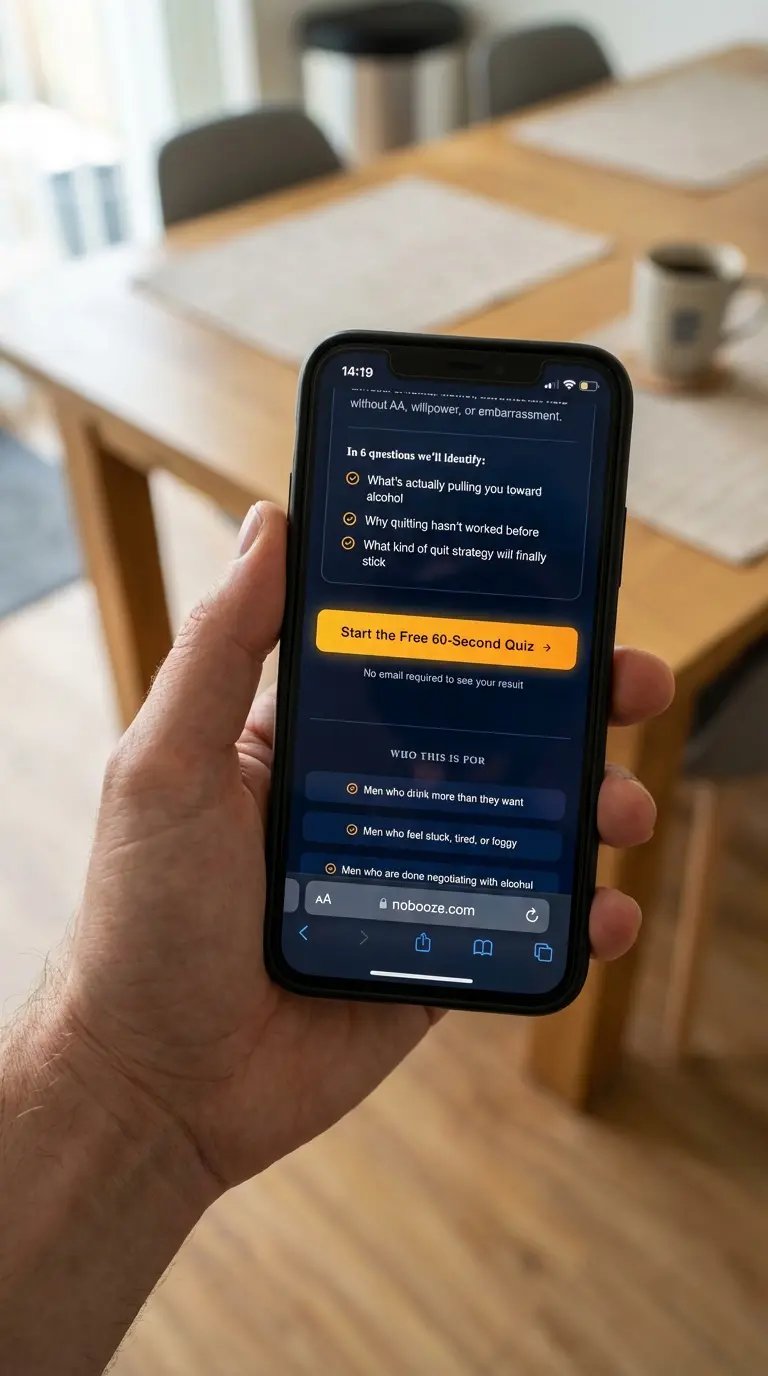 >> Take The Quiz <<
 TAKE THE FREE 60-SECOND QUIZ NOW
See how habits around alcohol may be showing up — and what can be done about it.
Free. Anonymous. Takes 60 seconds.



 124 Likes
 18 Replies
